















Dynamics 365 Finance & Supply Chain Management: 2026 Wave 1 Release Breakdown
The 2026 Wave 1 release for Dynamics 365 Finance and Supply Chain Management is shaping up to be one of the most impactful updates we’ve seen in recent years—and that’s saying something.
From AI-driven demand planning to next-generation financial frameworks and deeper Copilot integration, Microsoft is staying current with what modern ERP systems can deliver. These enhancements are strategic and designed to reduce manual effort, improve decision-making, and help organizations operate with greater agility and confidence.
Let’s break down what matters most in the Wave 1 2026 Release across Supply Chain, and Finance, and discuss what it means for your business.
Supply Chain Management
Improvements in the Supply Chain Management space of Dynamics 365 include:
Smarter Demand Planning: From Reactive to Predictive (and Beyond)
Demand planning continues to be one of the most exciting areas of innovation in this release—and for good reason. Microsoft is doubling down on AI and external data integration to move organizations beyond traditional forecasting models.
Price-to-Demand Correlation Analysis
Historically, demand planning has relied heavily on internal data like seasonality, historical trends, and statistical forecasting models. While effective, this approach has always had a blind spot: external influence.
That changes with the introduction of price-to-demand correlation analysis. Organizations can now incorporate external data sources such as:
- Inflation trends
- Macroeconomic indicators
- Geopolitical factors
These inputs can be converted into time-series data and analyzed alongside internal demand patterns to better respond to the market. This results in forecasts that are accurate and contextually aware.
Generative AI Demand Insights
AI-driven insights will reduce manual data analysis for planners and augment human decision-making without replacing it. With Generative AI-driven demand insights, the system will:
- Automatically detect anomalies and trends
- Surface insights that would otherwise require manual analysis
- Reduce the time planners spend digging through data
Note: This enhancement will happen within the Demand Planning app, which is a Power App and has a different release schedule.
Increased Forecast Stability
Planning volatility is a real challenge, especially when upstream changes create ripple effects in other areas of your organization. New enhancements in Planning Optimization introduce:
- Better “freeze time fence” controls
- Reduced replanning churn
- Protection of downstream processes
This means you will see fewer surprises, fewer overrides, and a boost in confidence in your planning.
Capable-to-Promise (CTP) Date Protection
For organizations relying on Capable-to-Promise, this is a critical improvement, as enhanced CTP date protection allows you to:
- Preserve reliable committed delivery dates from being overwritten during planning optimization runs
- Improved planning and customer trust through separation of planning recommendations and customer commitments to enhance confidence and reduce manual overrides.
- Strengthen trust across planning and execution teams and customers by reducing exception handling and simplifying governance.
The classic MRP was built with CTP date protection, which worked well. It has been a journey to add that to Demand Planning, but Microsoft is still working on updates for the September 2026 general availability.
Supplier Collaboration: From Communication to True Engagement
Supplier collaboration is getting a serious upgrade that is going to have some very positive benefits for organizations.
Enhanced Supplier Communication Agent
The supplier communication agent continues to evolve, now with:
- Improved automation of supplier interactions
- Reduced dependency on email
- Support for Excel attachments so you can read Excel files and update your dates
- Automated updates based on supplier-provided data
This dramatically improves traceability and reduces manual intervention. You can read a blog on the Supplier Communication Agent for a more in-depth analysis.
New Supplier/Vendor Collaboration Portal
One of the biggest shifts is the introduction of a completely redesigned supplier portal, built on Power Pages. These improvements are more than a User Interface (UI) refresh. They are a fundamental shift towards a more modern, scalable collaboration between you and your suppliers.
Key improvements include:
- A true external-facing portal (not just restricted ERP access)
- A 360-degree supplier view
- Supplier qualification and evaluation capabilities
As of right now, the existing Supplier Collaboration Portal gives you very restricted access to Dynamics 365, which is a common pain point. Also, the Vendor Collaboration Portal exists simply as a module within your system. This new portal will resolve plenty of those issues.
Strategic Supplier Management is the name of the game in this release. These feature improvements will give you better data consistency across procurement, planning, and execution, fostering strategic supplier partnerships.

Warehouse Management: AI Meets Physical Operations
Warehouse operations are getting a powerful infusion of intelligence in this release as well.
Spatial Location Intelligence, Cluster Picking, and Dynamic Item Placement
By feeding warehouse layouts into the system, organizations can now:
- Optimize picking routes dynamically through spatial location intelligence, recommending where items should live
- Enable precise serial and batch capture
- Reduce travel time within the warehouse by co-locating frequently picked items and reorganizing inventory for efficiency.
- Get recommendations based on historical picking patterns.
This is a good example of AI being applied in a very practical and high-impact way, turning your warehouse into a continuously optimized environment
Additional Enhancements
Other notable improvements include:
- Precise serial and batch capture in cluster picking
- Load data archiving for better database performance
- Native integration with external labor management systems – If you are already using an external labor management system, there is likely a connector, and if not, we can help you set one up.
- Advanced Shipping Notice (ASN) support in warehouse-only mode
Extending ERP Capabilities: External Pricing Calculations
A particularly interesting addition is the ability to expose pricing calculations via API. This will empower external applications to retrieve accurate, real-time pricing and discount calculation results directly from Supply Chain Management into other systems like CRM.
Instead of rebuilding pricing logic, you can now:
- Programmatically retrieve active prices or price quotes directly from Supply Chain Management
- Use key input data provided by the external system to get real-time pricing and discount calculations
- Seamlessly integrate pricing logic into your sales channels to enhance quoting and pricing consistency
The API will return a product’s calculated price, including simple discounts. It will not, however, calculate multiline discounts and will assume that each product has a quantity of 1. It’s a relatively simple change, but it eliminates redundancies and ensures consistency across systems.
Finance Innovations
For users working with Dynamics 365 Finance, there are plenty of exciting features to start using or put on your radar in this release.
Next-Generation Financial Journal Framework
This is one of the most foundational updates in the Finance module. The new journal framework is designed to:
- Improve performance
- Align with modern ERP architecture
- Better integrate with Copilot and automation features
One important thing to note is that the legacy framework isn’t going away, but the improvements will give your organization more flexibility and improve adoption.
Smarter Financial Processes with Automation
Delayed Settlement
Finance teams now have greater control over sequencing and reconciliation with delayed settlement capabilities, allowing:
- Separation of posting and settlement timing
- Improved flexibility in financial workflows
Automatic Bank Reconciliation Preview
Before posting bank reconciliations, finance teams can now preview matching results, validate accuracy, and reduce errors.
- Preview matching results
- Validate accuracy
- Reduce errors before posting
It’s a small change with big improvements for control and confidence.
Account Reconciliation Agent: Now Even Smarter
Already a standout feature, the Account Reconciliation Agent is getting even better with more enhancements, including:
- More advanced intelligent matching
- Bulk processing capabilities
- Expanded integration via Model Context Protocol (MCP)
- Support for additional modules:
- Inventory
- Fixed assets
- Project accounting
- Intercompany
- And more coming out soon
This continues to shift reconciliation from a manual, time-consuming task to an exception-based process.
Business Performance Planning & Analytics
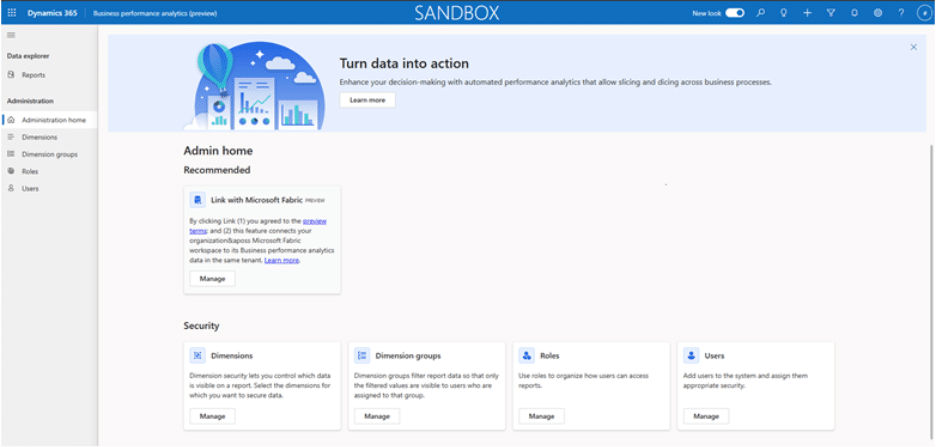
Microsoft is strengthening planning and analytics with:
- New quick-start templates that will speed up planning by reducing time to value
- Manufacturing analytics integration that enables richer operational insights
- More frequent (and configurable) data refreshes to streamline business performance analytics and financial planning
Financial Tags Expansion
Financial tags are closing the gap with traditional Financial dimensions, now supporting:
- Customer and vendor payment journals generated from the payment proposal
- Account and offset account lines on those payment journals
- Journals created through advanced bank reconciliation matching rules, including Generate voucher, Customer payment, and Vendor payment actions
Fixed Asset Improvements
Updates to the Fixed Assets space include:
- Intercompany transfer
- Mid-month Intercompany Transfer
- New transfer value methods
- Redesigned in-legal-entity split experience
- Enhancement for reducing balance depreciation
Invoice Capture: AI That Actually Saves Time
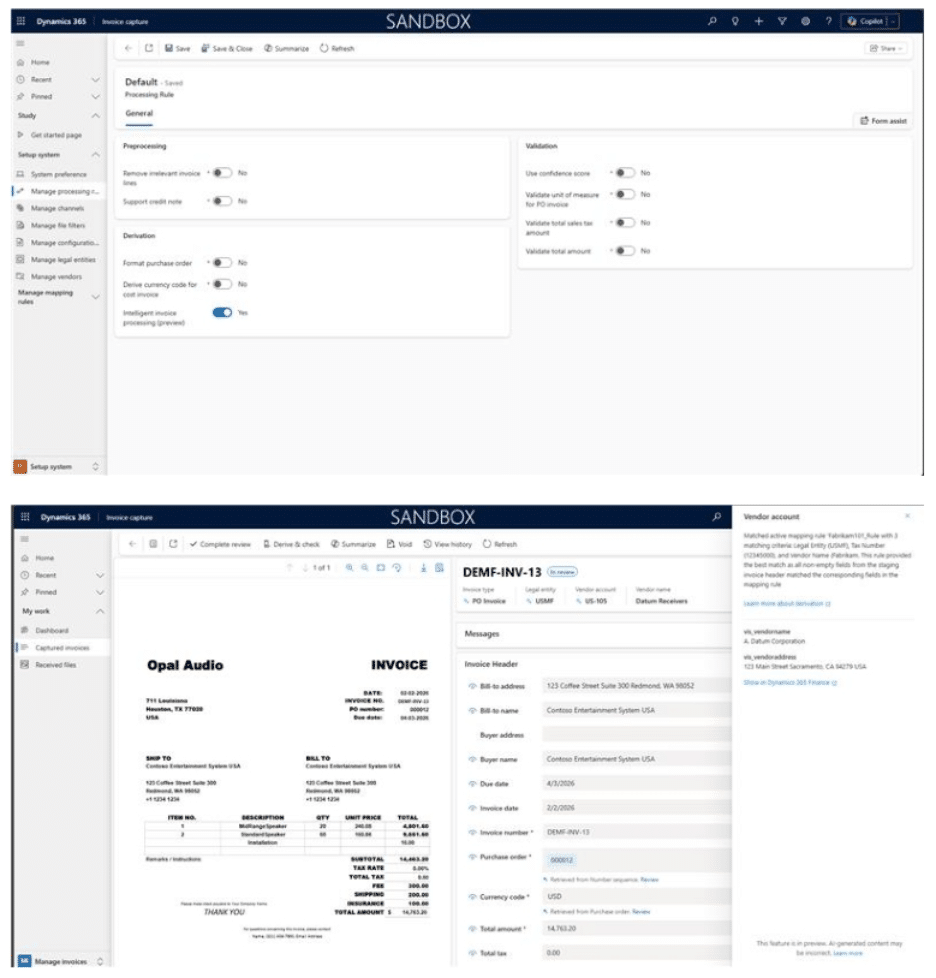
If you aren’t already using Invoice Capture, you should. It’s a great way to do OCR capture without a third-party solution. Microsoft continues to invest in enhancement, including:
- AI-driven header data extraction
- Side-by-side invoice and purchase order views
- Improved charge recognition and allocation
These updates reduce manual entry and improve accuracy.
Subscription Billing Performance Gains
For organizations using Subscription Billing, expect:
- Faster processing of subscription billing unbilled revenue
- Improved performance when generating a sales order invoice
- Enhanced multi-element revenue allocation logic during updates and termination
Microsoft Copilot and AI Enhancements
Copilot continues to mature, and Microsoft continues to heavily invest in it.
- Extend Copilot in Finance and Supply Chain Management with Client Actions: You can add capabilities to the sidecar Copilot chat experience in Finance and Supply Chain Management apps that are based on the business logic of your code
- Boost agent performance with optimized tool execution paths in with Model Context Protocol (MCP): This is a gamechanger, as the system can now:
- Understand business logic without explicit instruction
- Navigate ERP data intelligently
- Power agent-based workflows without heavy configuration
- Improve performance and accuracy of the tool calls
- Improved data tools in the MCP server: This allows you to move data operations from OData to SQL for improved performance and quality of agentic responses – allowing agents to navigate ERP data intelligently
- Enable agents to work with attachments and records through MCP: Agents can open records or attachments from Copilot responses, which improves transparency, traceability, and trust in the AI-generated reports.
In practical terms, users can ask questions like: “What is the balance for Customer A?” Through MCP, the agent will know where to go in the system, what data to check, and how to give you an accurate and useful answer. This is a major leap forward in having a truly intelligent ERP.
Archive Framework Evolution
Data growth is inevitable, but you need a system that can scale with your data while not sacrificing system performance. The new archive framework enhancements include:
- Build custom scenarios with Archive Framework: This allows customers to address unique regulatory, operational, and business-specific data retention needs without having to wait for scenarios from Microsoft.
- Enable parallel processing for the Archive long-term retention job execution: Execute multiple Archive long-term retention jobs in parallel based on legal entity. This will improve long-term data retention strategies.
Ready to Take Advantage of Wave 1?
At Stoneridge Software, we don’t just keep up with Dynamics 365 innovation—we help our clients stay ahead of it.
As a Microsoft Inner Circle partner, we bring:
- Deep expertise across Finance and Supply Chain
- Proven implementation and optimization strategies
- Early access insight into upcoming features
- A practical, results-driven approach to AI and Copilot
Connect with Stoneridge Software today to start maximizing your Dynamics 365 investment.

Under the terms of this license, you are authorized to share and redistribute the content across various mediums, subject to adherence to the specified conditions: you must provide proper attribution to Stoneridge as the original creator in a manner that does not imply their endorsement of your use, the material is to be utilized solely for non-commercial purposes, and alterations, modifications, or derivative works based on the original material are strictly prohibited.
Responsibility rests with the licensee to ensure that their use of the material does not violate any other rights.