














New and Exciting Features in Dynamics 365 ERP Solutions for Manufacturers
If you work for a manufacturer that’s evaluating its next technology move or is looking to move on from old and tedious processes, there has never been a better time to be in the Microsoft ecosystem.
Whether you are looking for a new ERP or are already using Dynamics 365 Business Central or Dynamics 365 Finance and Supply Chain Management and want to optimize your processes, there are new and powerful features and innovations around AI, automation, planning, and traceability.
At Stoneridge Software, we continually work with clients to identify opportunities for process improvement and streamline their workdays, ultimately driving profitability and success.
Watch the video or read the blog, where we will walk you through the newest features in both Business Central and Finance and Supply Chain Management. We will also discuss how they impact the processes and workflows you use every day.
New Features in Business Central for Manufacturers
Designed for small to mid-sized organizations, Business Central continues to evolve into a powerful manufacturing ERP—especially when paired with its growing extension ecosystem.
Here’s what’s new and noteworthy for manufacturers:
Core Manufacturing & Supply Chain Capabilities
Business Central is a solid foundation for companies that are focused on creating single, countable items and spans across manufacturing industries, including chemical, batch, food and beverage, and more.
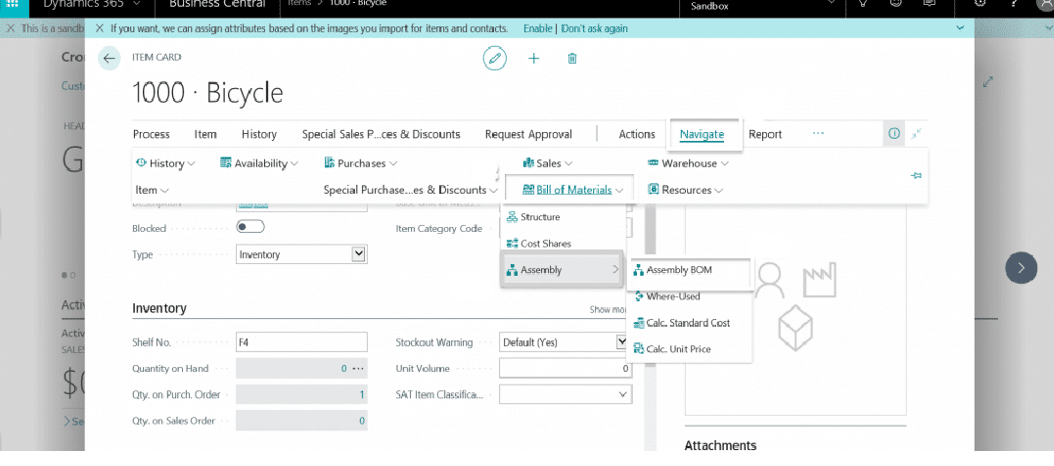
Business Central supports several out-of-the-box functionalities and processes core to your business, including:
- Discrete manufacturing
- Bills of materials (BOMs)
- Routings
- Work centers & machine centers
- Production orders
- Multiple locations, zones, and bins
- Inventory visibility
- Purchasing & sales
- Blanket POs
- Blanket sales orders
- Quotes and order processing
- Receiving and shipping
- Planning algorithms
- Standard MRP-style planning
- Infinite capacity scheduling (finite scheduling available via extension)
-
Extension Marketplace
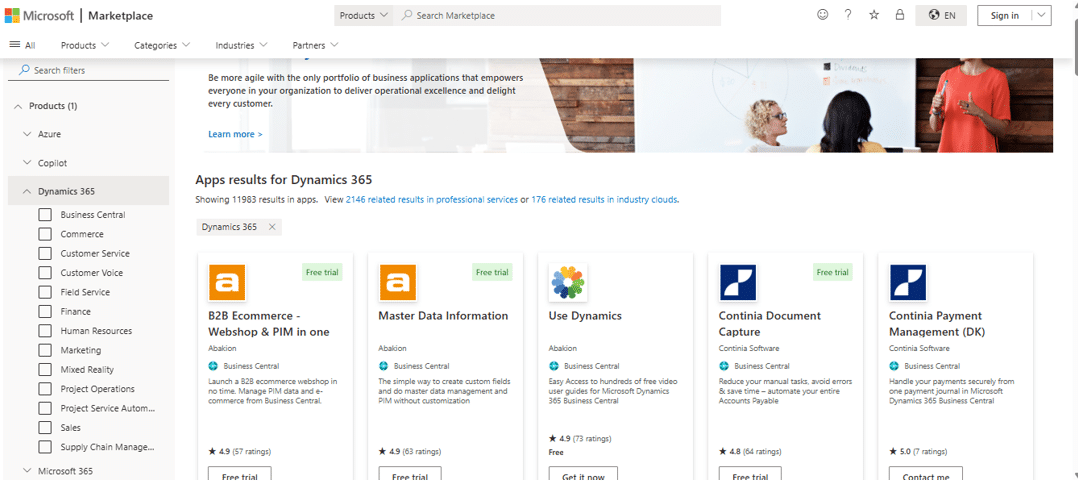
If you need more advanced processes or tools, like seasonal planning or product lifecycle ramp-ups, you can add extensions to Business Central. There are over 6,000 applications you can integrate into Business Central to give you, your team, and your system the boost it needs to go another level.
For example, food and beverage manufacturers will need an extension for something like recipe management. If you are a batch manufacturer, you might want something that streamlines flexibility around units of measure in terms of picking. Whatever your unique manufacturing needs are, there is likely an extension you can implement directly into Business Central to help.
Note: extensions will vary in price. Some may be free, some may charge a one-time use fee, and others may operate on a license per user basis that is paid monthly or annually. If it’s the latter, talk with the Stoneridge licensing team, as they can potentially save you some money by reviewing and consolidating your licenses.
Built-In Quality Management
In the Fall 2025 Wave Release, Microsoft introduced new quality functionality that is now generally available. It improves out-of-the-box functionality in terms of your ability to perform quality checks on:
- Shipping and receiving
- Assembly and production output
- Basic inspection processes embedded directly into manufacturing workflows
For many mid-market manufacturers, this eliminates the need for a costly third-party quality add-on.
Copilot & AI-Powered Agents: Practical Automation for Manufacturing and Supply Chain Management
Copilot AI is embedded directly into Dynamics 365 ERP solutions and streamlines workflows to maximize output. While Copilot already functions effectively and improves innovation within Business Central, some newer features include:
- Natural language help: Ask how to process a transaction in plain English
- Data insights: Ask questions about your ERP data and have Copilot compile it into a readable list or report
- Record summaries: Automated summaries on production orders, inventory items, customer records, and more.
For example, now when you go to open a production order, you will instantly see an AI-generated summary of related data and performance. This is true efficiency as it saves your team time running around chasing the information they need.
Sales Order Agent
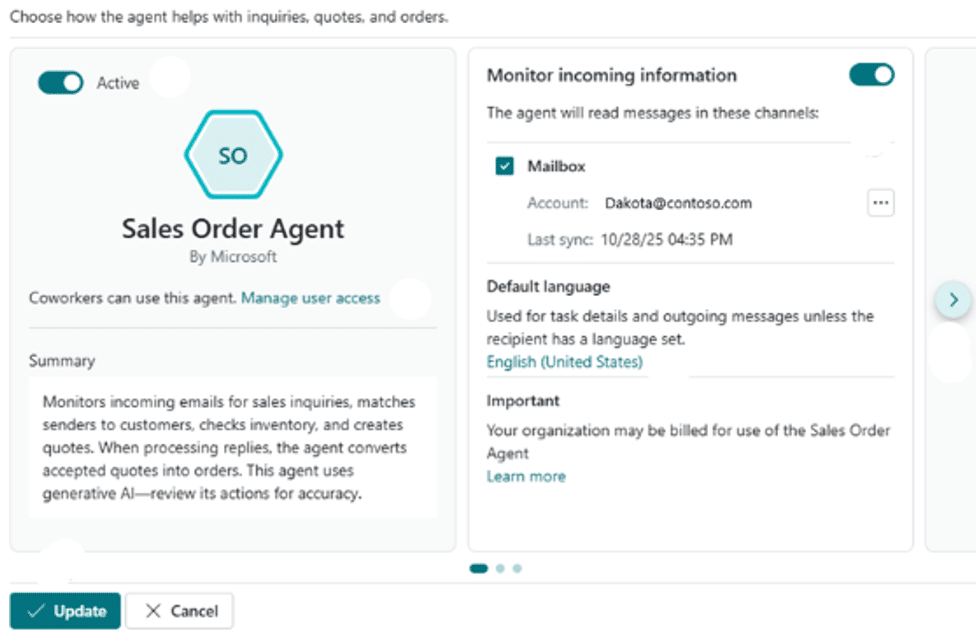
Another major Microsoft AI investment area is in agentic AI. This essentially means that there are now agents directly embedded into Dynamics 365 ERP that will automate tasks and streamline processes. The Sales Order Agent can monitor inbound email inboxes and:
- Read and interpret customer emails
- Create sales quotes or sales orders
- Check inventory availability
- Send quotes back to customers – in addition to other automated emails
- Process customer responses and revisions
Think of it as a digital assistant with hands on the keyboard.
Purchasing Agent
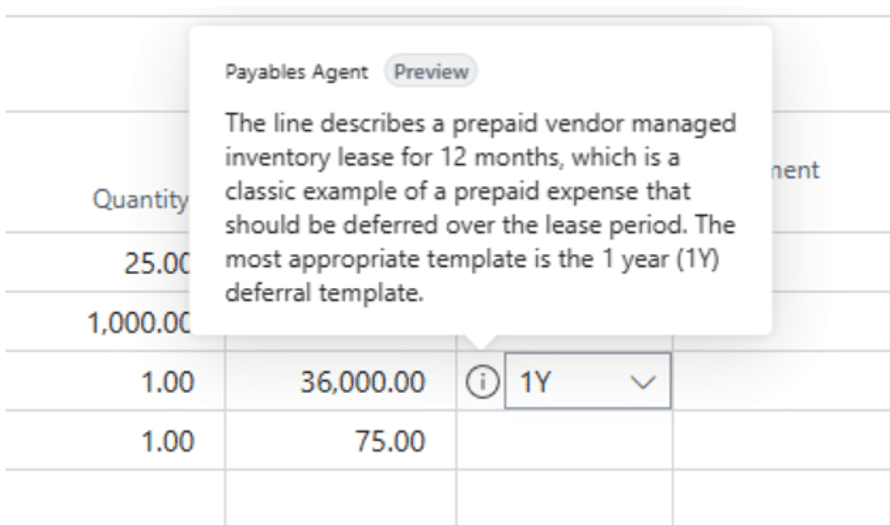
On the procurement side, this agent will:
- Reads vendor invoices using OCR (Optical Character Recognition)
- Automatically enters AP invoices into the system
- Matches invoices to purchase orders
This dramatically reduces manual data entry and improves AP efficiency.
New Features in Finance and Supply Chain Management for Manufacturers
Targeted toward enterprise-level organizations (with a 20-user minimum), Dynamics 365 Finance and Supply Chain Management delivers deeper out-of-the-box functionality for complex manufacturing environments and requires less in terms of extensions.
Let’s look at some of the new features:
Copilot & AI Agents: Enterprise-Grade Automation
Here are some of the agents you can already use in Finance and Supply Chain Management out-of-the-box.
Account Reconciliation Agent (Now Generally Available):
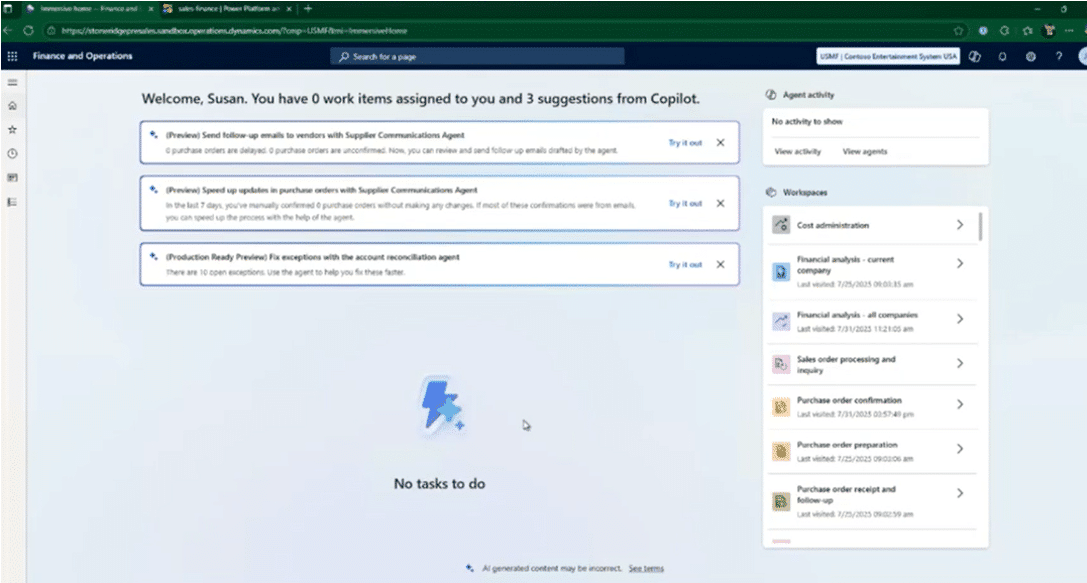
The account reconciliation agent can help you with several core workflows and processes. Some of its capabilities include:
- Automatically reconciling subledgers to the general ledger
- Flagging only exceptions
- Reducing your month-end close time dramatically
So now, instead of having someone from your Finance team go in and review every single transaction, you can trust that the agent will do that for you and focus only on any discrepancies that come up.
Supplier Communications Agent
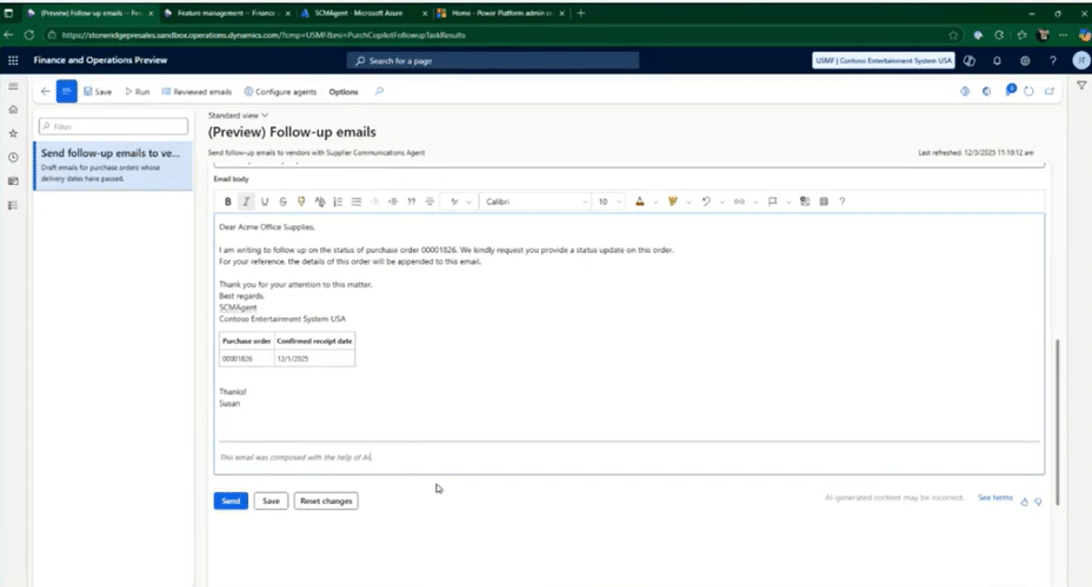
Building on the capabilities of the purchasing agent in the Business Central section, this similar agent takes it a step further with some core functionalities, including:
- Monitoring supplier email communications
- Proactively contact vendors when POs approach due dates
- Update delivery dates in the system based on supplier replies
- Trigger new MRP runs automatically to reflect delays
This is a major step forward in real-time supply chain responsiveness.
Data Quality Agent (Coming later in 2026)
One of the most exciting upcoming features is expected to be available in some capacity later this year. This agent has the potential to be a gamechanger, and will:
- Compares standard route times to actual performance
- Pulls signals from:
- IoT-connected devices
- Route card journals
- Suggests updates to routing times based on real-world performance
Instead of manually reviewing and adjusting routings, the system intelligently recommends changes.
New Features in Finance and Supply Chain Management for Core Functionality
Agentic AI might be the shiny new toy, but that doesn’t mean that Microsoft is ignoring significant improvements to the core manufacturing functionalities. Some new features you can expect in the near future include:
Inventory Tracing (Public Preview / Wave 2)
New inventory tracing capabilities allow you to:
- Enter a serial or batch number
- View every step in:
- Production
- Warehousing
- Supply chain movement
This is critical for helping you manage recalls, regulatory compliance, and quality audits.
Planning Optimization
The new Planning Optimization feature is a dedicated microservice that is replacing traditional, legacy Material Requirements Planning. (MRP) Note: We heavily recommend that if you haven’t switched from MRP to planning optimization yet, you should do so as soon as you can.
Perhaps the biggest feature here is how much time it saves you. With MRP, processing times could take as long as 13-14 hours. With planning optimization, that processing time is cut down to under an hour. This saves you a tremendous amount of time and will help you avoid system slowdowns during runs.
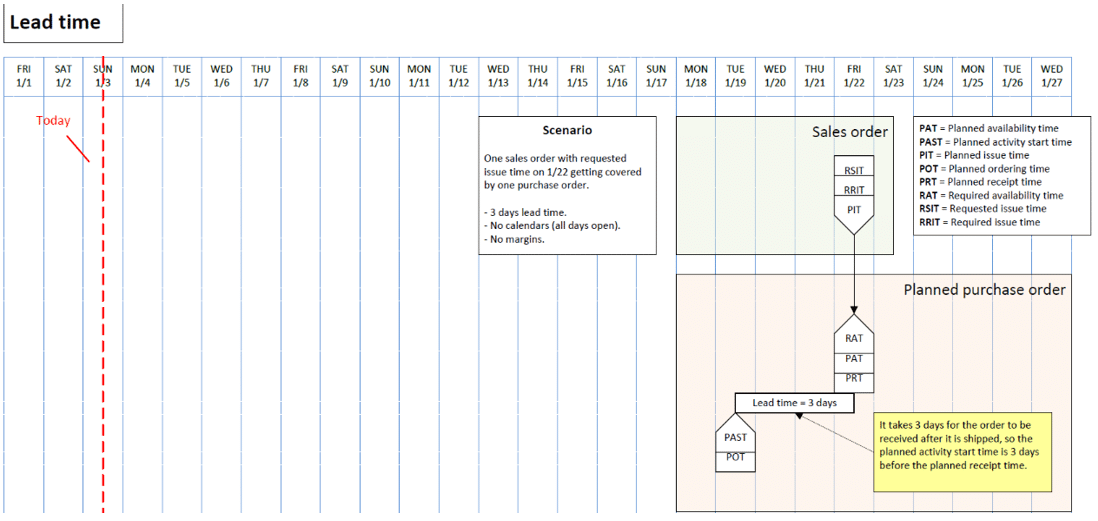
2025 Wave 2 also added full lean manufacturing support as part of planning optimization. This is a major upgrade for high-volume, complex operations.
Advanced Demand Planning Enhancements
Finance and Supply Chain now includes a true demand planning application that goes beyond simple forecasting. There are several key enhancements to improve your forecasting accuracy, including:
- The ability to take from multiple external signals like inflation data, weather information, and industry indexes. This will show you how the market is reacting, and then you can go plug those numbers into your demand planning application to get even more accurate information.
- Improved ramp-up modelling for new products
- AI-assisted forecasting insights via Copilot
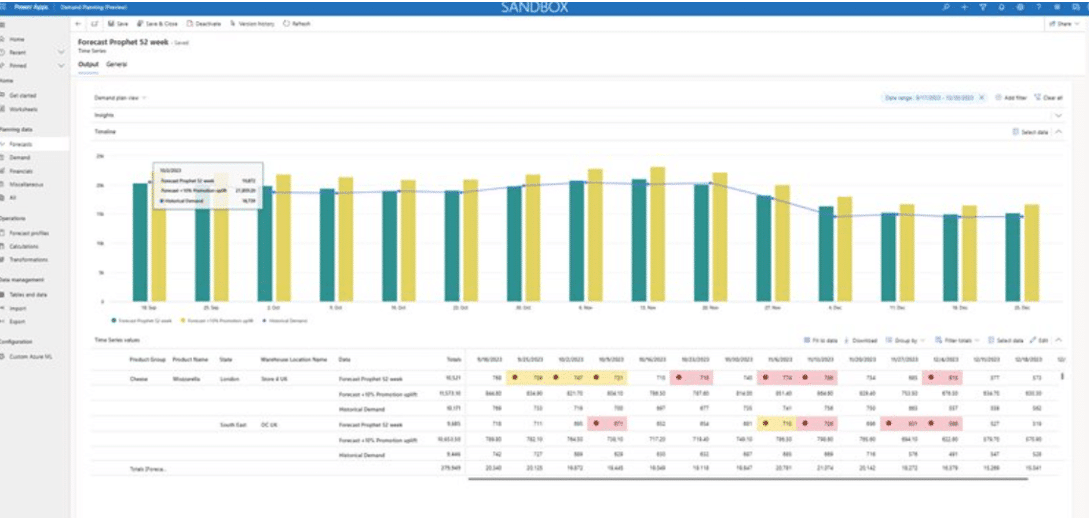
You can now model new product introductions with far greater accuracy, even if historical data is limited.
New Warehouse Management Application
Wave 2 introduces a redesigned warehouse application featuring:
- AI-driven warehouse optimization insights
- Location recommendations based on pick times
- Intelligent suggestions to reduce travel time and improve layout efficiency
The system can recommend moving high-velocity items closer to pick paths—without needing a full warehouse schematic.
The Difference Between Business Central and Finance & Supply Chain Management
If you are new to Dynamics 365 ERP but are thinking of switching (either from another ERP or a legacy Microsoft system like Dynamics GP) there is some brief information you should have before considering which system is right for you.
Dynamics 365 Business Central
Best suited for:
- Small to mid-sized manufacturers
- Lower user counts (no minimum required)
- Discrete manufacturing
- Organizations comfortable leveraging extensions for advanced needs
Key characteristics:
- Core functionality + extension model
- Faster implementations
- Lower cost of entry
- Infinite scheduling out of the box (finite via extension)
Dynamics 365 Finance & Supply Chain Management
Best suited for:
- Medium to enterprise organizations
- 20+ users (minimum)
- Complex manufacturing (lean, global, highly regulated)
- Deep out-of-the-box functionality
Key characteristics:
- Extensive native capabilities
- Warehouse scanning
- Forecasting
- Traceability
- Shop floor execution
- Quality control
- Longer implementation timelines (often 12–18 months)
- Higher total investment, but enterprise-grade scalability
There’s no right or wrong answer. The right fit depends on user count, business complexity, compliance requirements, and long-term growth strategy. You can read a more in-depth post about the differences between the two here.
Ready to Modernize Your Manufacturing ERP?
The pace of innovation across Microsoft’s manufacturing solutions is accelerating—especially with Copilot and AI-driven automation now embedded directly into core processes.
If you’re considering implementing or optimizing Business Central or Finance and Supply Chain Management, you need a partner who understands:
- Manufacturing complexity
- Supply chain realities
- ERP implementation strategy
- AI governance and adoption
- Change management
At Stoneridge Software, we specialize in helping manufacturers design, deploy, and optimize Microsoft solutions the right way—from strategy to go-live and beyond.
Contact Stoneridge Software to start the conversation.
This article was co-authored by Joe Tews.

Under the terms of this license, you are authorized to share and redistribute the content across various mediums, subject to adherence to the specified conditions: you must provide proper attribution to Stoneridge as the original creator in a manner that does not imply their endorsement of your use, the material is to be utilized solely for non-commercial purposes, and alterations, modifications, or derivative works based on the original material are strictly prohibited.
Responsibility rests with the licensee to ensure that their use of the material does not violate any other rights.